I didn’t post yesterday about my intention, but based what I was seeing in the news, the intention was for the church’s role in reacting to racism. The immediate trigger for this concern was the situation in Missouri, but the intention was wider than that. I was particularly struck by the story of the woman pastor who was struck by a rubber bullet by police, when it was clear that her role in the conflict was mediation and peacekeeping. My not-so-neutral prayer in all of this is that we take our role as radical peace makers seriously, respecting the dignity of every human being even if it means personal risk.
There is enough troubling about this issue that today’s mass will also focus on praying that our fear of the “other,” the ones who differ from us, will not blind us to our commonalities. Yesterday the focus was specifically on racism here in the United States; today the focus will expand to the church’s response in all of the areas where racism is an issue.
You are invited to voice your concerns, and to join in this intention.

This isn’t what I had planned to focus on for this third day of the novena (August 13), but in light of Robin Williams’ suicide, it seems appropriate.
Especially since as I was sitting at the Hamilton train station tonight after seeing my therapist, two police officers stopped by and asked for my name and the name of the other woman waiting there. It turns out that they were looking for a potentially suicidal woman named Amanda. As they left, my companion on the platform turned to me and said, “I’ve thought of suicide.” She went on to spill out a story of addiction and isolation–not asking for anything, except a listening ear. There wasn’t anything I could do except listen, and offer her the hope that things could get better.
.
Your prayers are asked for Amanda and Chris and all who struggle with “the black” and other mental “demons.” Pray too that the Christian community will respond with compassion and gentleness.
Today’s intention focuses on those who have left their homes because of persecution, violence, catastrophe, or oppression. May we remember that our God is one who loves the alien and the foreigner. Pray for those who aid these refugees, and those in authority making the decisions love mercy, act justly, and walk humbly with God. (Micah 6:8)
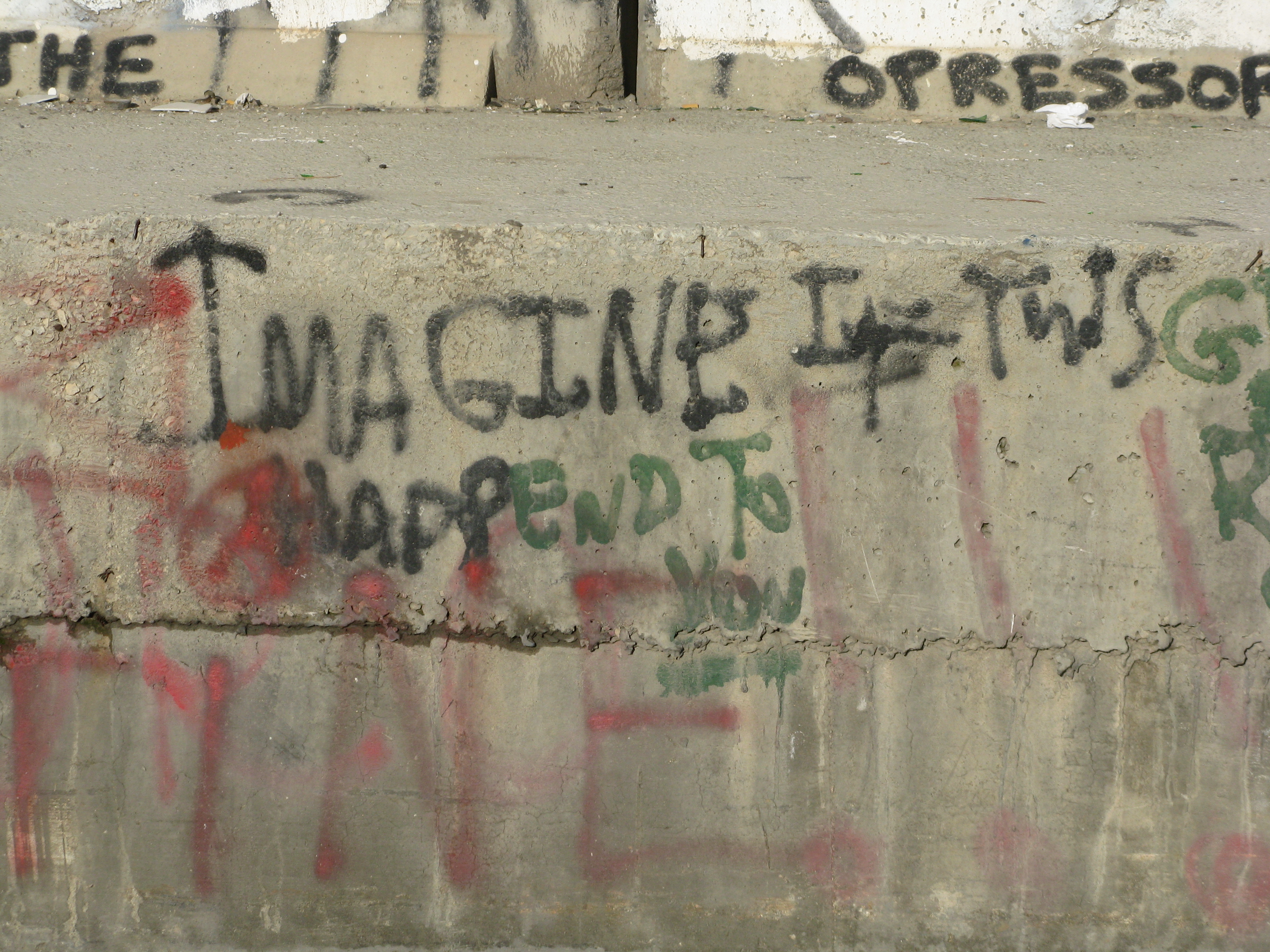
August 11: Prayer for the Christians and other persecuted religious minorities in Iraq and Syria, who are facing brutal violence for their faith. Prayers are offered for them and for those who would come to their assistance. Prayers are also being offered for wisdom among the leaders of the world, that they would be led to right actions to defend the helpless.
From the Roman Catholic organizati0n Aid to the Church in Need comes this prayer composed by Patriarch Sako of Baghdad: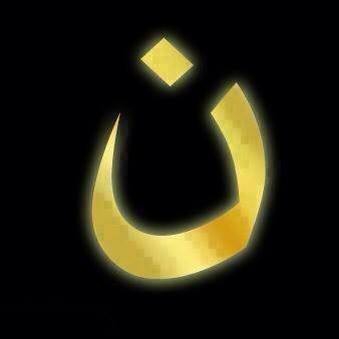
Lord,
The plight of our country
is deep and the suffering of Christians
is severe and frightening.
Therefore, we ask you Lord
to spare our lives, and to grant us patience,
and courage to continue our witness of Christian values
with trust and hope.
Lord, peace is the foundation of life;
Grant us the peace and stability that will enable us
to live with each other without fear and anxiety,
and with dignity and joy.
Glory be to you forever.
Amen
The Oratory will start a novena of masses Monday, August 11. This novena will draw on the question of the parable of the Good Samaritan, “Who is my neighbor?” Christ’s response was unexpected. He refused to draw a narrow circle and limit caring to that number of people. Instead, he focused on a Samaritan–anathema to the Jews of the time–who was more of a neighbor to an injured man than than his co-religionists.
This series of masses will focus on praying that Christians will be “good neighbors” in areas of the world where there is pain, injury, and oppression. There will be prayer for discernment for wise, caring choices, and right actions by Christians involved in the Middle East conflicts, the immigration controversy, equality, and more.
I’ll be posting each day the specific intention of the mass and you are more than welcome to add your own concerns.
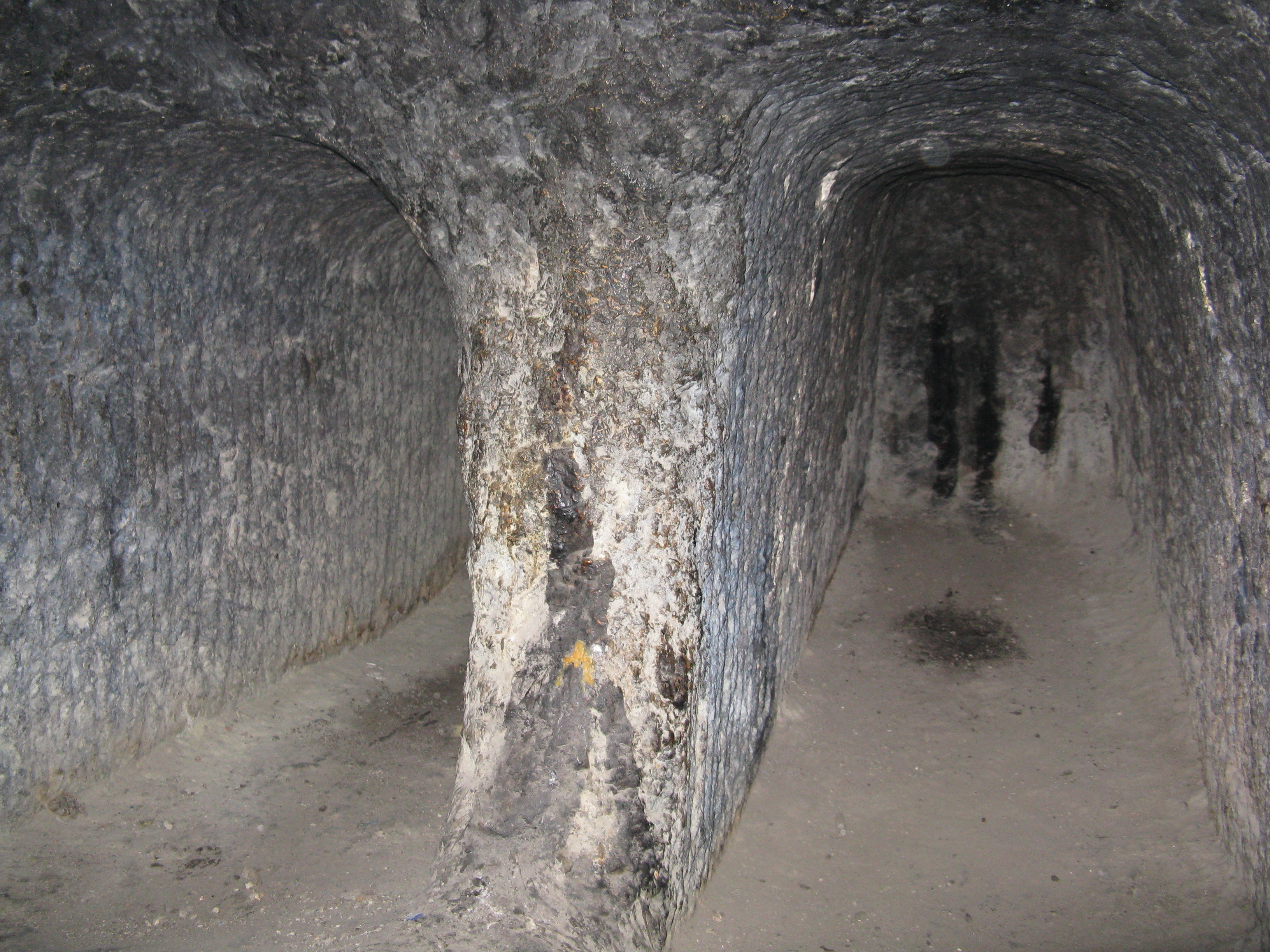
Jesus Is Buried
Jesus’ burial did not look at all like a state funeral. He was hurriedly taken down from the cross after a Roman soldier stuck a spear in his side to make certain that he was dead. Jewish custom called for the body to be anointed, but there wasn’t time for that. Sunset was approaching, and the holiday was at hand. So, they wrapped him in cloth, put him in a borrowed tomb, and rolled a rock in front of it.
There wasn’t anything elegant about the tomb either. First century tombs in Israel were little more than a cave hollowed out of the rock.
Just to make sure that the disciples didn’t cause trouble, a small group of Roman soldiers was stationed by the tomb. Well disciplined and efficient, they were a visible reminder of Rome’s supremacy even over the dead.
When the women prepared to return, to perform the tasks that custom allowed, they were concerned about how they would roll the rock back. They may also have been anxious about the soldiers.
God’s presence was there in the tomb however. The Lord of Heaven and Earth would not be confined by a stone, however massive. The Prince of Peace could not be restrained by military might. And the God who chose Jerusalem as his city will not be bound by our fears or our violence.
Pray for the peace of Jerusalem.

A cross marking the presence of a monastery near Jerusalem.
There really are no words that do justice to Christ’s death on the cross. It is awesome enough that the fullness of God should come down and live as one of us. That our God would be put to death in (and for) our broken world is beyond our comprehension. When we look at the stark reality of the cross, words fail us.
If we look away, however, back at the city walls, we will see Jerusalem, a city chosen by God and precious in God’s sight. This same city that is racked by conflict, this same area that has been fought over for so long, is the particular site where Jesus chose to live and die in the fullness of humanity.
People may dispute the exact site and the details, but there is no avoiding the fact that the very core events of the Christian faith took place in this city of Jerusalem. Jesus walked these streets, worshipped in the Temple here, was tried here by the Romans, and died here.
As we remember Christ’s death, let us not forget to pray for the peace of Jerusalem.
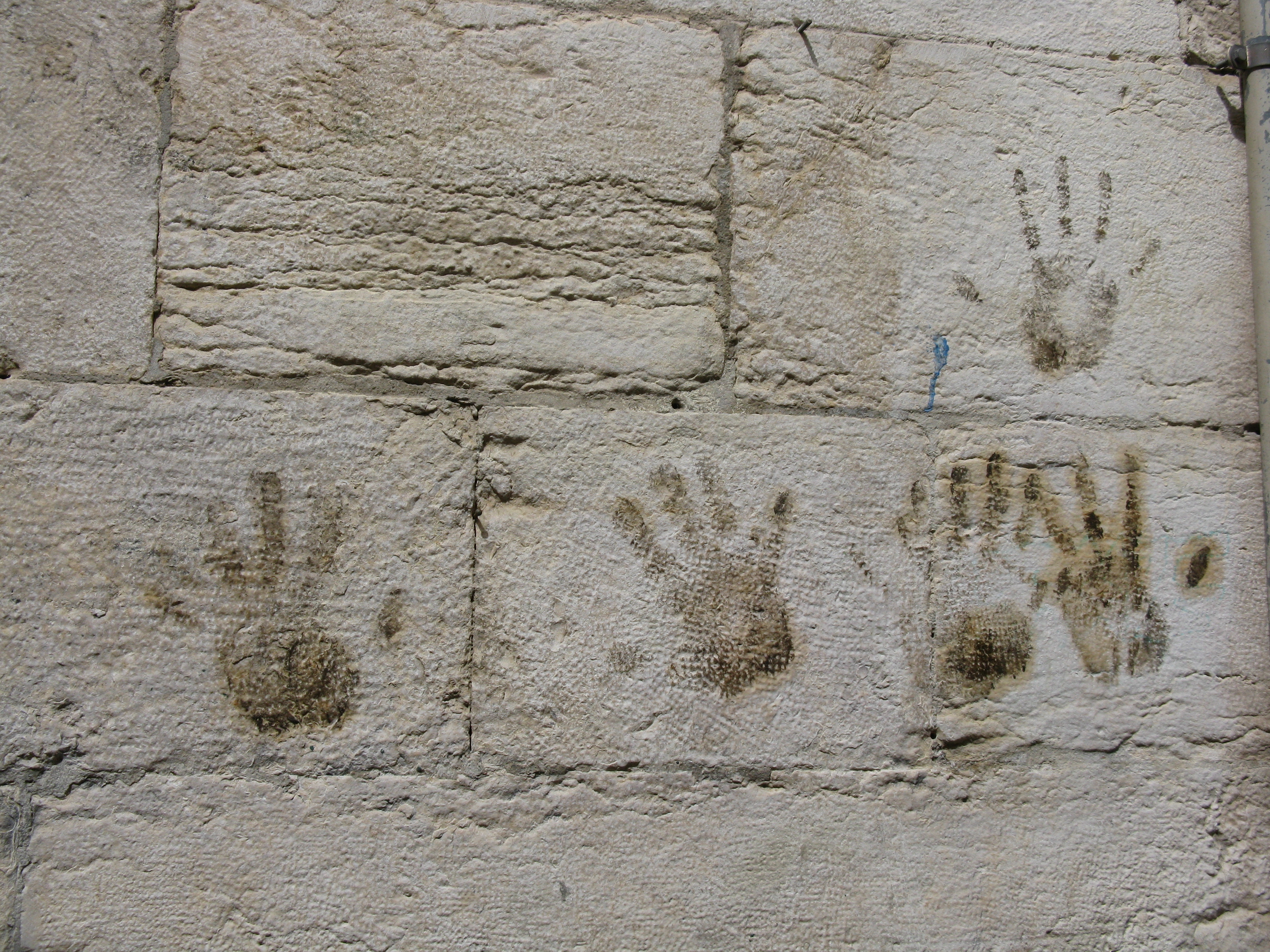
Jesus Speaks to His Mother and the Disciple.
As you enter the church of the Holy Sepulcher, to your left is a small Armenian shrine. There are no icons or pictures in the shrine itself to mark what this spot commemorates—just a tall, round stone structure with arches. The presence of a blazing candle-stand and a ring of hanging bronze lamps, however, mark it off as a sacred spot.
This is the place where, tradition tells us, the faithful women watched as Jesus was crucified. His mother Mary, Mary Magdalene, and other women were kept at a distance from Christ’s execution, but they stood there in grief, able to see and hear everything.
The Apostle John stood nearby as well. Seeing them, despite his agony, Christ called out, not just asking, but telling, John to regard Mary as his mother, and Mary to regard John as her son.
By his words here, Jesus set his mother and his beloved disciple into a new caring family, one not based on ties of blood, but on ties of faith—the same ties that bind God’s children together.
When the Iraq War broke out, Dominican sisters in Wisconsin realized that there were other Dominican sisters in the Middle East, and began a campaign of buttons and bumper stickers that read, “I have family in Iraq.” Their definition of family extended not just to the religious sisters, but to all Iraqi Christians—and indeed, to all of God’s children in Iraq.
Let us remember as we pray for peace that we too have family in Jerusalem.
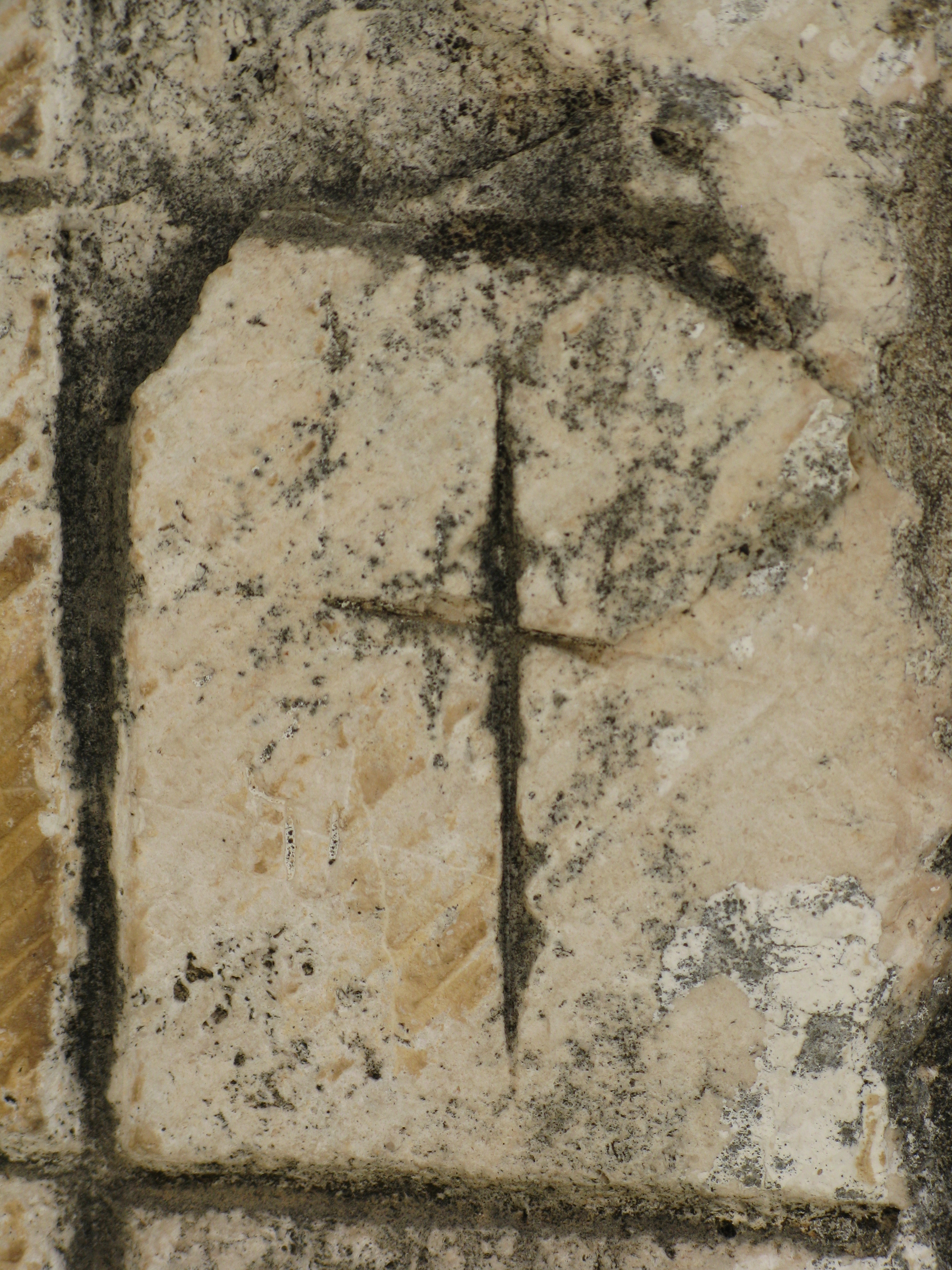
Jesus Promises His Kingdom to the Good Thief.
Death by crucifixion was slow, humiliating, and excruciatingly painful. It could take hours or days, and was the result of anything from blood loss to dehydration. So, it is not surprising that one of the men crucified with Jesus lashed out against him, mocking him and cursing him. Pain can do terrible things to human beings, even good ones—and the men crucified beside Christ were anything but good.
What is surprising is that the other criminal there didn’t join in on the verbal abuse. Instead he acknowledged his own deeds, took the abuser to task, and almost humbly asked Jesus to remember him when Christ came into his kingdom.
Christ’s response was equally surprising: “This day you will be with me in paradise,” making this obscure victim of the Romans’ worst form of execution the only person to be certainly promised heaven.
As human beings, we cannot speak the words Christ spoke. We do have a choice, however, when we are in pain. We can lash out, verbally and even physically as the first criminal did. Or we can acknowledge our own faults and have our actions and words come from a restrained humility.
Pray that, in all of the pain in Jerusalem and the Holy Land, people will not respond with violent words or deeds. Pray for the peace of Jerusalem.
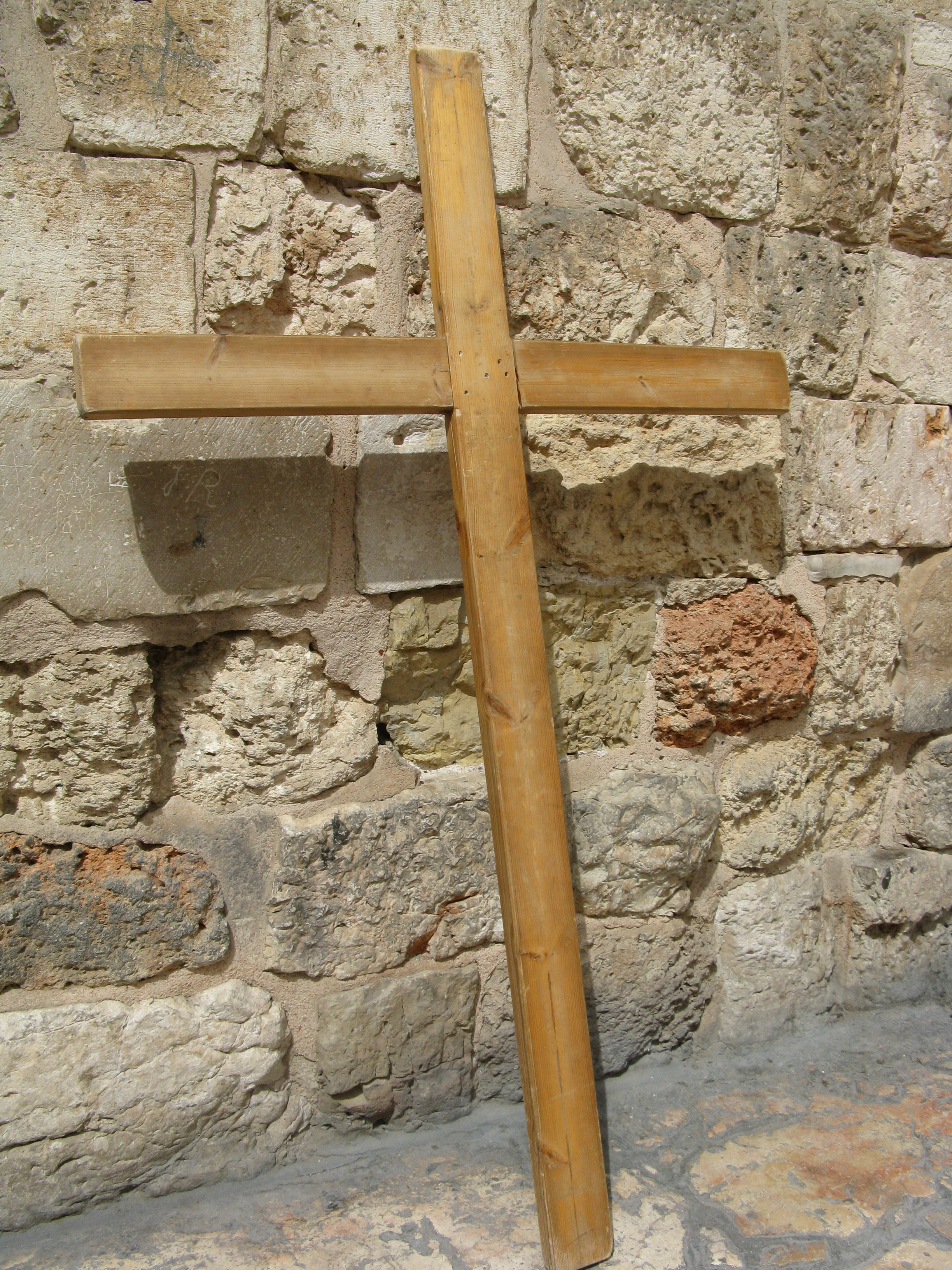
A cross on the Via Dolorosa.
Jesus Is Crucified.
In the Church of the Holy Sepulchre, there is a stairway just to the right of the main door. At the top of those stairs is a divided chapel, which is where the crucifixion has traditionally been commemorated. The Orthodox side is resplendent with a life-sized icon of the crucified Christ adorned with gold leaf. Burning in front of it are racks of blazing candles. There is also a small altar. At any time people may be seen waiting to the side of it. One by one, they kneel and crawl under the altar, and stay there for a few moments.
If you join the line, and crawl under the altar yourself, you will find a large hole. Reaching down into the hole, you will touch solid rock—the rock of Mt. Calvary, the place where Jesus was crucified. Everything else around you points to this one truth, that here in this place, the savior of the world freely chose to accept this punishment. All of the beauty, all of the devotion, and all of the tradition are based on the tangible reality of the rock and the crucifixion that happened on it.
Jerusalem is sacred to three religions: Christianity, Judaism, and Islam. Jews revere it because it is the center of their ancestral home and the site of their Temple, the most holy place on earth; Muslims honor it because of its connection to Mohammad, and Christians hold in their highest esteem because it is the site of their Lord’s passion, death and resurrection.
All too often, however, these three religions have been in conflict over this city. Their sense of sacredness has led to claims of ownership, which have led in turn to violent clashes between the various children of Abraham.
Pray that there will be peace and reconciliation between these three religions in the city. Pray for the peace of Jerusalem.
 Oratory of St. Catherine of Siena