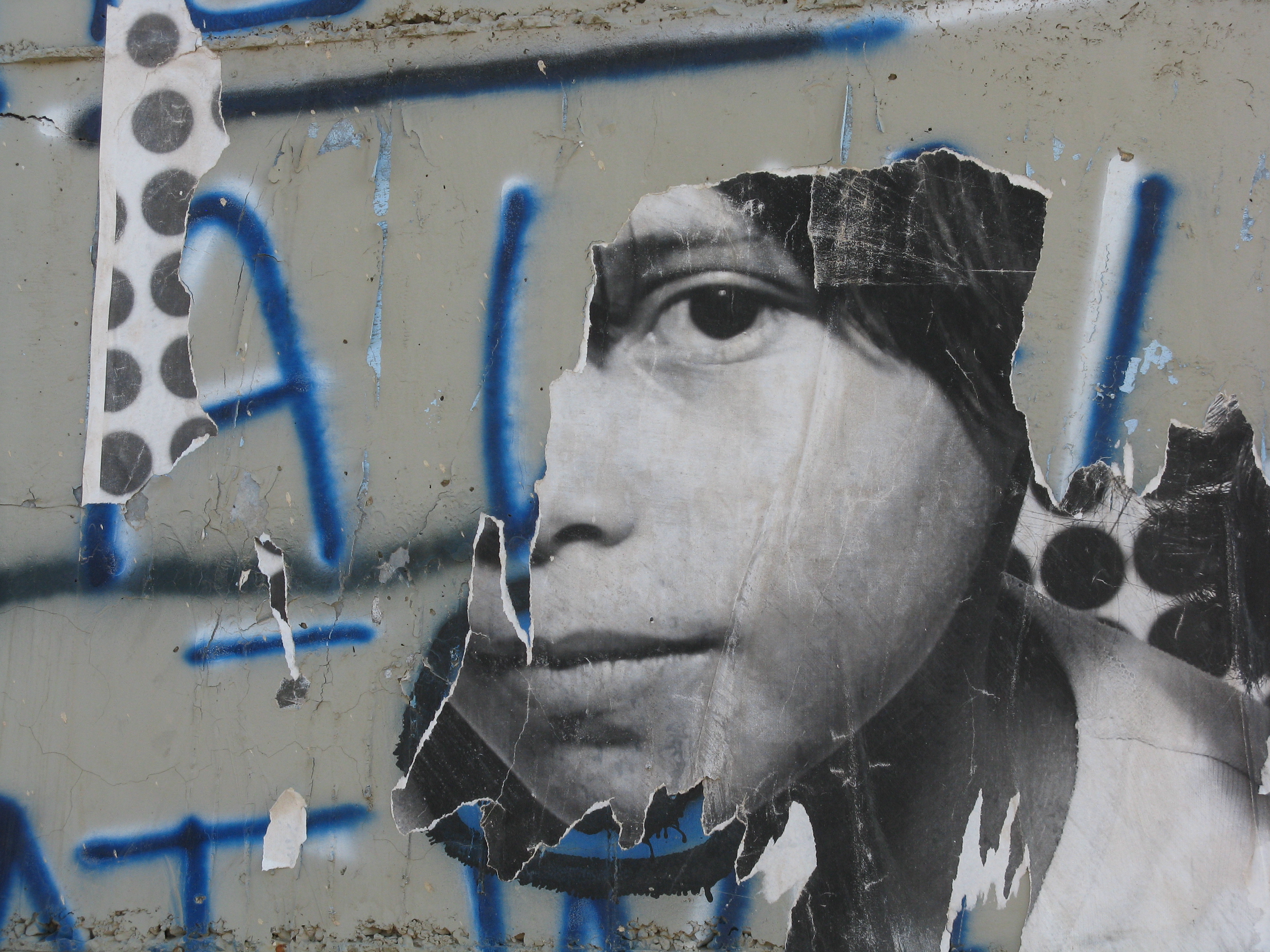
Photo on the separation wall
Jesus Meets the Women of Jerusalem.
Executions have always appealed to the darker side of some people, so that it is not surprising that a large crowd followed Jesus on his way to the cross. Not all of the crowd was hostile, however. Among them were a number of women, who wept and lamented Jesus’s death. Even though he was in agony, Jesus spoke to them, warning about difficult times to come.
Women were always an important part of Jesus’s ministry. They followed him, learned from him, provided for him, and came to him for healing. They stayed faithful at the foot of the cross. In fact, the first person who saw Jesus after his resurrection was a woman, Mary Magdalene; and he commissioned her to bear the news to his other disciples.
Women throughout the centuries have endured economic, social, political, and religious discrimination. Despite progress in some areas, women still face real challenges. That is true in Jerusalem, and in the Holy Land as a whole. None of the Christian denominations that control the Church of the Holy Sepulchre recognize women clergy. Arab women face an unemployment rate that is three times that of their Jewish counterparts, and their culture frowns on them leaving their village to work. Their access to education is more limited and their dropout rate is high. Despite the fact that Israel grants Arab women citizens the vote, there are no Arab women members of the legislative body.
Jewish women also face different forms of discrimination. The ultra-orthodox culture enforces limitations on women in some sectors. Women cannot get a divorce unless their husband consents, regardless of the circumstances. Some ultra-orthodox men regard it indecent to portray women in public advertisements, so one can see pictures of women spray-painted over in bus stops and on walls. Recently, women were arrested for wearing prayer shawls and reading scripture aloud at the holy site of the Western Wall.
Jesus died for all, including women, who are fellow heirs of the kingdom of God. Anything that limits their potential hinders them from being all that God has called them to be.
Pray for the peace of Jerusalem.

Simon of Cyrene is forced to carry the cross.
Jerusalem may have been one of the minor provinces of the Roman Empire, but it was not an isolated backwater. Visitors to Jerusalem came from all over the Mediterranean, from scattered colonies of Jews in North Africa, Asia, Rome, and other places—from ”every nation under heaven” the book of Acts says.
One of those visitors came from Cyrene, in present-day Libya. Simon of Cyrene was in the crowd as Jesus passed by, carrying his cross. Jesus had been beaten and whipped—it is likely that he was stumbling badly under his burden. The Roman soldiers were unwilling to assist so they singled out Simon, and forced him to pick up the cross.
We know little about Simon other than his name and where he came from—but we do know that he had two sons, Alexander and Rufus. Does that mean that the Christian community of the time knew him? We can’t be sure but it is possible.
Today, Jerusalem still attracts people from all over the world. Pilgrims come from Africa, Asia, Europe, North and South America—indeed every nation under heaven. Jews come to visit and to live, taking up the citizenship there that is their right. Its economy also draws those who hope for better things.
One of the real struggles in Israel now is between some of these groups. Some of the legal and illegal immigrants from Africa have met hostility. Many of those who define themselves as orthodox Jews speak against the discrimination against them. Israeli Arabs see themselves as second-class citizens, and Palestinians resent that they live under a law not applied to Israelis.
One of the glorious promises that God made to Abraham was that he and his descendants would be a light to the nations—a light to the world. Pray that this glory may be fulfilled in full, for all of those who live in and journey to Jerusalem .
Pray for the peace of Jerusalem.
Jesus Carries His Cross.
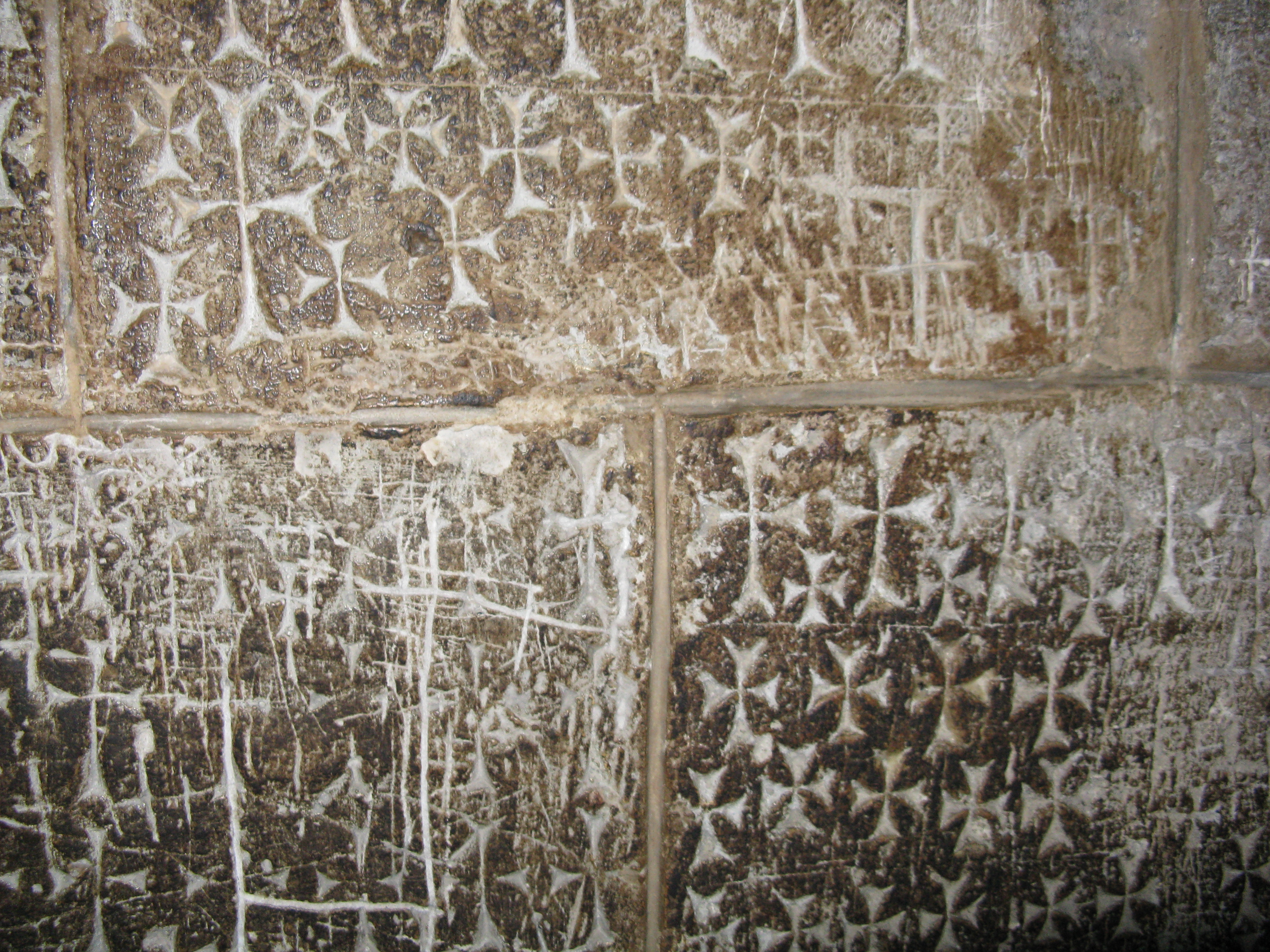
It is not surprising that crosses are a common sight in Jerusalem. Not only do they decorate churches, but tourists as far back as the Crusaders have scratched them on the walls. Smaller wooden and metal ones by the thousands are on sale in shops. There are even a large number of full-sized wooden crosses that can be found leaning against the stone walls that line the Way of the Cross, the Via Dolorosa.
Christian pilgrims are drawn to Jerusalem and Israel from all over the world. They want to see where Jesus lived and preached, to walk where he walked, and to be where he was crucified and resurrected. Some are content to observe and pray, but others want to enter more actively into their Holy Land experience. So they pick up one of these life-sized crosses and carry it for a distance up and down the steep streets of the city. Sometimes they carry it the full length of the Via Dolorosa, putting the cross down only when they get to the Church of the Holy Sepulchre.
It’s an interesting sight watching one of these people choose a cross to carry. They look over the available crosses, pick one up, heft it—and then possibly put it down again and pick up another that is more to their liking. This doesn’t reflect badly on their devotion; it is often a realistic acknowledgment of their own limitations.
Jesus, though, did not pick his own cross. The Roman soldiers forced him to carry one of their choosing on the torn flesh of his back. They then marched him and other condemned men through the streets in a public display of the consequences of defying Roman law. But in the pain and shame, this was also the path of redemption for a broken and fallen world and for a hurting humanity.
Pray that there may be redemption in the brokenness of our world and our selves. Pray for the peace of Jerusalem.
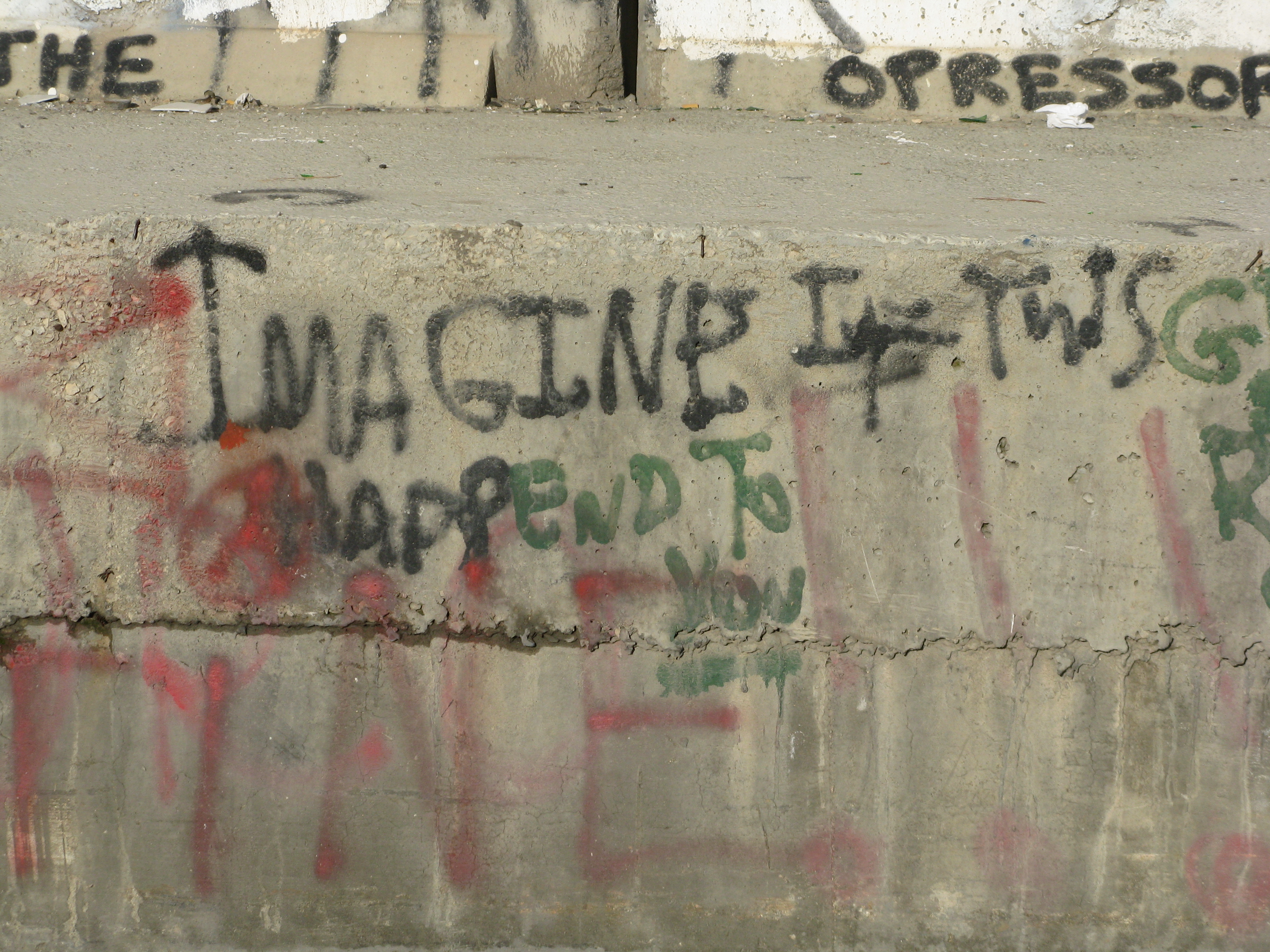
An image from the separation wall
Jesus is Scourged and Crowned with Thorns.
Jesus was handed over into the custody of Roman soldiers to be flogged. This was not a light punishment; and the choice of 39 lashes was not a random one. Forty lashes, it was known, would kill a man, but one less than that would still keep him alive enough to be crucified. The Roman soldiers carried out their task with a brutal efficiency with a whip studded with metal chunks that tore into the flesh, and left the victim a bloody wreck. That was their duty.
They went beyond their orders, though, when they mocked their victim with a crown of thorns, a robe of royal purple, and sarcastic words of homage. Then they beat him. Why did they do that? It was not because they were monsters. They were well-trained, sell-equipped, well-disciplined military professionals, but they were also the visible force of the Roman occupation, living among people who hated and feared them. They were potential targets and they knew it.
Living with a very real sense of threat can affect people in dangerous ways. They can come to see those who threaten them as less than human, and when that view is combined with fear and power, the results can be cruel. Mockery can be one result; violence can be another.
The Holy Land today is still a place where fear, threat, danger, power, and hatred can combine to evoke a sense that the lives of those on the “other side” are valueless. Neither side is immune from this internal poison.
Pray that the darkness of fear will not obscure a common humanity. Pray for the peace of Jerusalem.
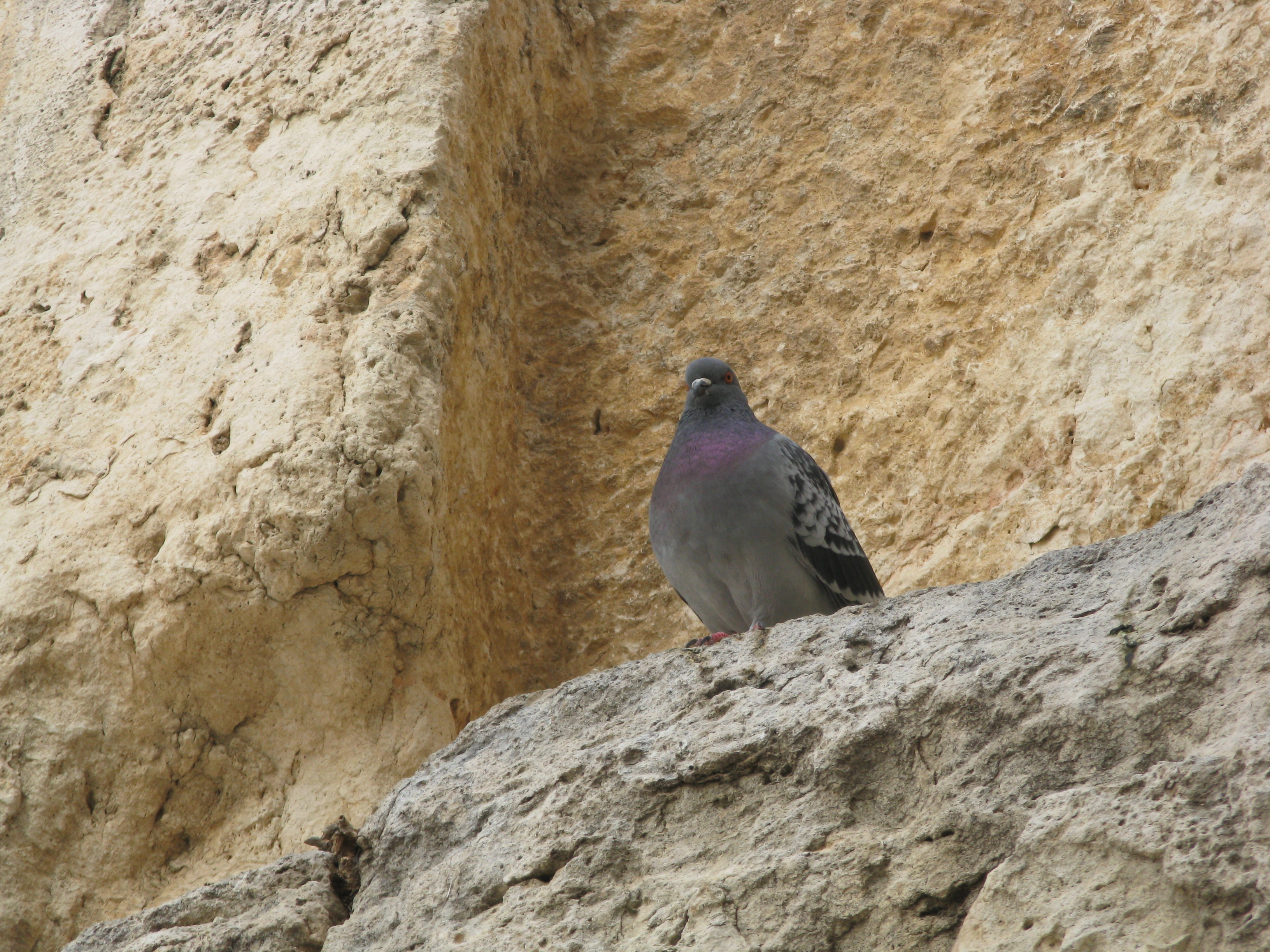
A bird on the Western Wall, the only part of the Second Temple to survive.
Jesus is Judged by Pilate.
In the time of Jesus, Rome was a world power. Its empire stretched from Britain to Armenia, and its military might was unrivaled. Roman control brought roads, aqueducts, arts, and engineering to its conquered territories, but it was also brutal in enforcing its dominance. “When they make a desert, they call it peace,” wrote Tacitus.
Rome’s empire included Jerusalem and the Holy Land. Jesus had already been condemned by the Temple authorities, but it was Rome who had the final say in matters of life and death. So Jesus was brought before Pilate,
Pilate was indifferent to religious matters; what he cared about was whether Jesus was a political threat in an area that was no stranger to conflict. The Canaanites, Philistines, Egyptians, Hebrews, Babylonians, and Greeks, among others, had all fought and held the city at one time or another. In the end the Romans would end by destroying much of the Jerusalem and the Second Temple in 70 A.D. after a massive revolt—a destruction so thorough that only the foundation of the Temple remains.
Given this violent history, and all that followed through the Crusades and into the present, it can sometimes feel frustrating to pray for peace, and news from the area can create a sense of helplessness.
We must not forget, however, that in that judgment scene, the eventual victor was the silent, seemingly powerless Jesus. And God is still present in all that occurs.
Pray for the peace of Jerusalem.
Jesus is Denied by Peter.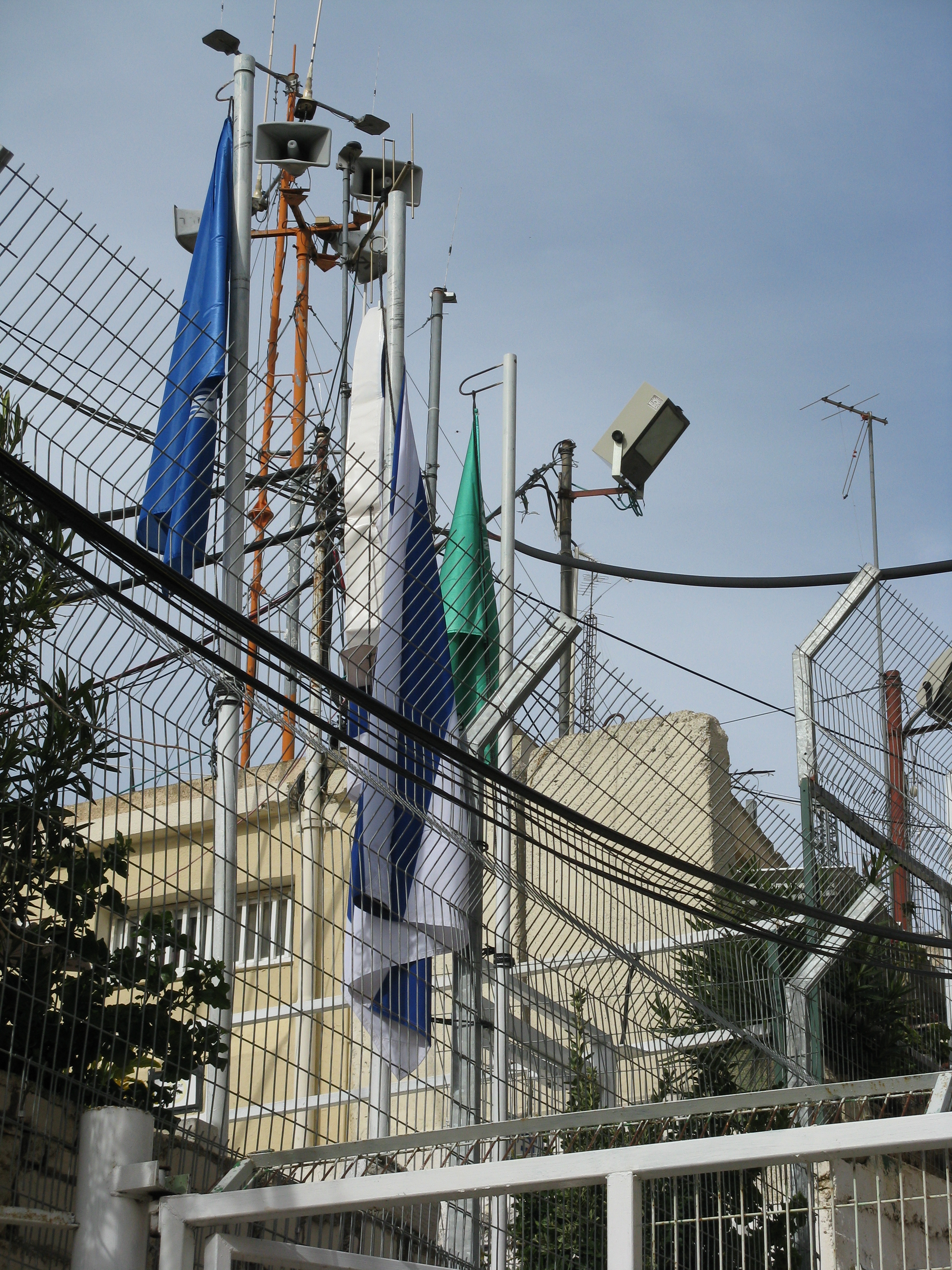
Fear is a powerful force. When we are afraid, our bodies physically gear up to fight or flee, preparing us to react to whatever threat we fear.
Peter knew this fear, sitting in the courtyard of the High Priest’s house. We need to give him credit. He was there, waiting and hoping against hope that things would not turn out as he feared. He was right to be afraid. Jesus was accused as a revolutionary, a threat to both the Roman and Jewish authorities—and both powers were known to deal brutally with what they perceived as threats.
Then a woman looked closely at Peter and publicly questioned him about whether he was with Jesus. To have said yes might have subjected Peter to the same condemnation that Jesus faced. Peter’s fear took over. He didn’t physically flee, but his words distanced himself from Jesus. Verbally, he fled as far as he could go, denying Jesus and betraying Peter’s commitment to His Lord.
Flee or fight. That’s what our bodies tell us to do when we are threatened. That’s what is natural to the Israeli Jew sitting at a bus stop, knowing that others have been killed by suicide bombers in similar places. So she stares at the approaching Palestinian, wondering, “Does she too have a bomb strapped to his body that I can’t see?”
Fear is natural to the Palestinian sitting tensely on a couch in an apartment at Gaza, who knows that an Israeli bomb strike could come at any minute. The attack might be targeted at a military target, but there is often “collateral damage” that destroys and kills far more than the intended target.
We may not be able to stop our bodies’ internal processes that prepare us to attack or run, but we can choose how we react to our fear. Do we let our fear impel us into actions that betray our humanity and our deeply held beliefs, or do we try to transcend our fears and do what is right?
Pray that fear will not rule our lives and the lives of those in the Holy Land. Pray for the peace of Jerusalem.
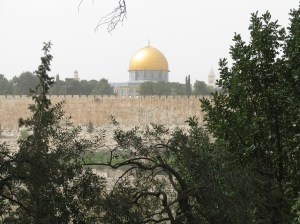
Why do the Scriptural Stations of the Cross?
I was sitting in an urban ministry class on worship where the professor extolled the virtues of “non-traditional” services that would incorporate art, music, and perhaps even movement into the worship experience.
“Why does it have to be non-traditional?” I wondered. The possibilities around the Stations of the Cross (also known as the Way of the Cross, or the Via Dolorosa) suddenly took on a new meaning for me.
In the Stations of the Cross, participants process along a path with stations that celebrate events in Christ’s Passion and death while singing, praying and reading scripture. The stations themselves can be very simple—merely numbers on the wall as they are on the Via Dolorosa in Jerusalem—or they can be works of art created by believers for believers.
The main problem was that my class was being offered by a conservative evangelical seminary. The traditional Stations of the Cross are compelling, but a number of them focus on events that are not to be found in scripture, and that would put off most of my fellow students.
So it was with pleasure that I discovered the Scriptural Stations of the Cross, which use the same format but commemorate events that are found in the New Testament. Initiated by Pope John Paul II, this set of stations is traditional enough to appeal to Christians with a Catholic background, and is biblical enough to appeal to those with a more Protestant background. In fact, my hope is that these stations “speak” to all Christians.
I came to realize that this form of devotion dovetailed with one of my major prayer concerns—peace in the Holy Land. So I resolved to create a set of photos, meditations, and prayers that would bring all of these pieces together.
The photos come from my visits to Israel, especially to Jerusalem and Bethlehem, and include various photos of pieces of the separation wall. The meditations are drawn from my experiences there. When this is all compiled together into a coherent whole, the prayers will probably be drawn largely from the Episcopal Book of Common Prayer but with additions from a variety of sources.
While there are deep divisions among Christians over what our relationship should be to the state of Israel, I hope that there is no division over the fact that we are all called to “pray for the peace of Jerusalem” (Psalm 122:6).
Comments, criticisms, and kudos are always welcome on these postings.

What Are the Scriptural Stations?
The traditional Stations of the Cross are a long-esteemed expression of Christians’ desire to enter more deeply into the events of Holy Week and Christ’s Passion. However, the traditional stations contain elements and events that are not contained in scripture. That can make them a challenge for Christians who may have serious questions about the validity of that material.
The following scriptural stations were inaugurated by Pope John Paul II on Good Friday, 1991. The scriptural texts are from the New American Bible.
First Station: Jesus in the Garden of Gethsemane
Then Jesus came with them to a place called Gethsemane, and he said to his disciples, “Sit here while I go over there and pray.” He took along Peter and the two sons of Zebedee, and began to feel sorrow and distress. Then he said to them, “My soul is sorrowful even to death. Remain here and keep watch with me.” He advanced a little and fell prostrate in prayer, saying, “My Father, if it is possible, let this cup pass from me; yet, not as I will, but as you will.” When he returned to his disciples he found them asleep. He said to Peter, “So you could not keep watch with me for one hour? Watch and pray that you may not undergo the test. The spirit is willing, but the flesh is weak.”
(Matthew 26:36-41)
Second Station: Jesus, Betrayed by Judas, is Arrested
Then, while [Jesus] was still speaking, Judas, one of the Twelve, arrived, accompanied by a crowd with swords and clubs, who had come from the chief priests, the scribes, and the elders. His betrayer had arranged a signal with them, saying, “the man I shall kiss is the one; arrest him and lead him away securely.” He came and immediately went over to him and said, “Rabbi.” And he kissed him. At this they laid hands on him and arrested him.
(Mark 14: 43-46)
Third Station: Jesus is Condemned by the Sanhedrin
When day came the council of elders of the people met, both chief priests and scribes, and they brought him before their Sanhedrin. They said, “If you are the Messiah, tell us,” but he replied to them, “If I tell you, you will not believe, and if I question, you will not respond. But from this time on the Son of Man will be seated at the right hand of the power of God.” They all asked, “Are you then the Son of God?” He replied to them, “You say that I am.” Then they said, “What further need have we for testimony? We have heard it from his own mouth.”
(Luke 22: 66-71)
Fourth Station: Jesus is Denied by Peter
Now Peter was sitting outside in the courtyard. One of the maids came over to him and said, “You too were with Jesus the Galilean.” But he denied it in front of everyone, saying, “I do not know what you are talking about!” As he went out to the gate, another girl saw him and said to those who were there, “This man was with Jesus the Nazarean.” Again he denied it with an oath, “I do not know the man!” A little later the bystanders came over and said to Peter, “Surely you too are one of them; even your speech gives you away.” At that he began to curse and to swear, “I do not know the man.” And immediately a cock crowed. Then Peter remembered the word that Jesus had spoken: “Before the cock crows you will deny me three times.” He went out and began to weep bitterly.
(Matthew 26: 69-75)
Fifth Station: Jesus is Judged by Pilate
The chief priests with the elders and the scribes, that is, the whole Sanhedrin, held a council. They bound Jesus, led him away, and handed him over to Pilate. Pilate questioned him, “Are you the king of the Jews?” He said to him in reply, “You say so.” The chief priests accused him of many things. Again Pilate questioned him, “Have you no answer? See how many things they accuse you of.” Jesus gave him no further answer, so that Pilate was amazed…. Pilate, wishing to satisfy the crowd, released Barabbas… [and] handed [Jesus] over to be crucified.
(Mark 15: 1-5, 15)
Sixth Station: Jesus is Scourged and Crowned with Thorns
Then Pilate took Jesus and had him scourged. And the soldiers wove a crown out of thorns and placed it on his head, and clothed him in a purple cloak, and they came to him and said,”Hail, King of the Jews!” And they struck him repeatedly.
(John 19: 1-3)
Seventh Station: Jesus Bears the Cross
When the chief priests and the guards saw [Jesus] they cried out, “Crucify him, crucify him!” Pilate said to them, “Take him yourselves and crucify him. I find no guilt in him.”… They cried out, “Take him away, take him away! Crucify him!” Pilate said to them, “Shall I crucify your king?” The chief priests answered, “We have no king but Caesar.” Then he handed him over to them to be crucified. So they took Jesus, and carrying the cross himself he went out to what is called the Place of the Skull, in Hebrew, Golgotha.
(John 19: 6, 15-17)
Eighth Station: Jesus is Helped by Simon the Cyrenian to Carry the Cross
Reader: They pressed into service a passer-by, Simon, a Cyrenian, who was coming in from the country, the father of Alexander and Rufus, to carry his cross.
(Mark 15: 21)
Ninth Station: Jesus Meets the Women of Jerusalem
A large crowd of people followed Jesus, including many women who mourned and lamented him. Jesus turned to them and said, “Daughters of Jerusalem, do not weep for me; weep instead for yourselves and for your children, for indeed, the days are coming when people will say, ‘Blessed are the barren, the wombs that never bore and the breasts that never nursed.’ At that time, people will say to the mountains, ‘Fall upon us!’ and to the hills, ‘Cover us!’ for if these things are done when the wood is green what will happen when it is dry?”
(Luke 23: 27-31)
Tenth Station: Jesus is Crucified
Reader: When they came to the place called the Skull, they crucified him and the criminals there, one on his right, the other on his left. [Then Jesus said, “Father, forgive them, they know not what they do.”]
(Luke 23: 33-34)
Eleventh Station: Jesus Promises His Kingdom to the Good Thief
Now one of the criminals hanging there reviled Jesus, saying, “Are you not the Messiah? Save yourself and us.” The other, however, rebuking him, said in reply, “Have you no fear of God, for you are subject to the same condemnation? And indeed, we have been condemned justly, for the sentence we received corresponds to our crimes, but this man has done nothing criminal.” Then he said, “Jesus, remember me when you come into your kingdom.” He replied to him, “Amen, I say to you, today you will be with me in Paradise.”
(Luke 23: 39-43)
Twelfth Station: Jesus Speaks to His Mother and the Disciple
Standing by the cross of Jesus were his mother and his mother’s sister, Mary the wife of Clopas, and Mary of Magdala. When Jesus saw his mother and the disciple there whom he loved, he said to his mother, “Woman, behold, your son.” Then he said to the disciple, “Behold, your mother.” And from that hour the disciple took her into his home.
John 19: 25-27
Thirteenth Station: Jesus Dies on the Cross
It was now about noon and darkness came over the whole land until three in the afternoon because of an eclipse of the sun. Then the veil of the temple was torn down the middle. Jesus cried out in a loud voice, “Father, into your hands I commend my spirit”; and when he had said this he breathed his last.
(Luke 23: 44-46)
Fourteenth Station: Jesus is Placed in the Tomb
When it was evening, there came a rich man from Arimathea named Joseph, who was himself a disciple of Jesus. He went to Pilate and asked for the body of Jesus; then Pilate ordered it to be handed over. Taking the body, Joseph wrapped it [in] clean linen and laid it in his new tomb that he had hewn in the rock. Then he rolled a huge stone across the entrance to the tomb and departed.
(Matthew 27: 57-60)
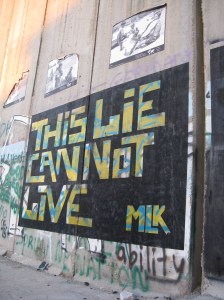
Jesus is condemned by the Sanhedrin.
At the very heart of the Jewish identity is the Law. Given at Sinai, and defining the people called out of Egypt, the Law demands a universal commitment to justice and truth. (These qualities were so important that the Law itself declared a curse on those who had one set of laws for themselves and another for the “strangers” in the land.) In the trial before the Sanhedrin, both of these essential elements, justice and truth, were betrayed.
The Temple authorities were determined to eliminate the threat that they saw in Jesus– so determined that they were prepared to accept false testimony to convict him. When they couldn’t get the lies to agree, they “spun” Christ’s words into something that they could condemn.
In our time, we often succumb to the same temptation to twist the truth in order to promote our own vision of things. Truth is too often sacrificed at the altar of partisanship. And so it is in the Holy Land as well.
It is understandable and human that each of the parties to the current conflict in Israel has their own narrative of events. However, false testimony, wild conspiratorial rumors, and events staged to incite violence betray not only the Law but the very dignity of every human being. When such things are done, it shreds the image of Truth that is in us.
Pray that truth, law, and justice will not be betrayed. Pray for the peace of Jerusalem.
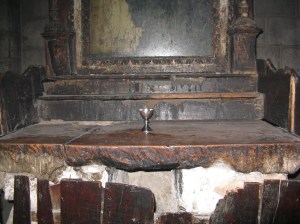
Judas Betrays Jesus.
Over the centuries, people have speculated about Judas and why he betrayed Jesus. The gospel writers blamed it on greed and the devil. Others have claimed that it was due to Judas’s disappointment with Jesus. Still others have speculated that it might have been an attempt to force the Lord’s hand.
What is undisputed is that Judas chose a precious sign of intimacy to betray Jesus to the authorities. This first act of the Passion—so excruciatingly painful—wasn’t done by the Romans or the Temple hierarchy; it was a deliberate act by one who was near to Jesus. Those who are closest to us are often the one who can hurt us the worst.
Some of the most painful conflicts in the Holy Land today are the ones between Christian churches—between those who follow the Prince of Peace and claim His name as their own. Nowhere in the world are Christian divisions more widespread.
In the Church of the Holy Sepulcher (the place traditionally commemorated as the place of Christ’s crucifixion, burial, and resurrection), every inch of the building is divided among four different historic Christian churches. Violence has broken out over even minor trespasses or hints of disrespect. Many Christian churches are rigidly excluded: Anglicans and Protestant Christians have no place in this sanctuary. Even the roof is a site of conflict: shut out of the church. Ethiopian Christians have established a monastery there on the roof and warily defend their precarious spot against any tiny encroachments.
There are occasional signs of grace, but all too often, the strife must tear at God’s heart.
Pray for the peace of Jerusalem.
 Oratory of St. Catherine of Siena